Carlo Brooks · 6 October 2026
Client Preference Mapping Through Service History Analysis in Independent Beauty Venues
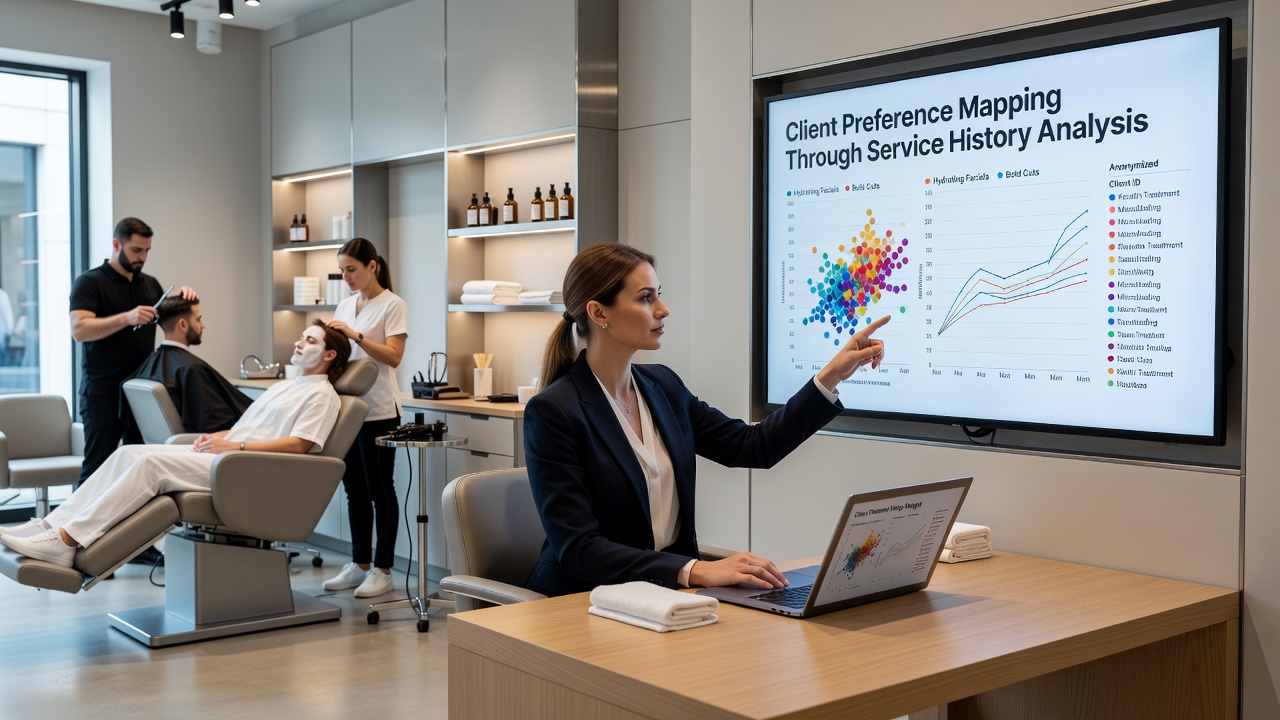
Independent beauty venues have turned to service history analysis as a practical method for mapping client preferences, drawing on appointment records, product selections, and technician notes accumulated over multiple visits. This approach allows owners to identify recurring patterns without relying on direct surveys, since data points such as color formulas, treatment durations, and seasonal booking trends reveal consistent choices. Venues in urban and suburban areas alike have adopted basic database tools to organize this information, and the process often begins with simple spreadsheets before moving to specialized salon management software.
How Service History Becomes Preference Data
Service history contains timestamps, service types, and add-on selections that together form a timeline of each client interaction. Analysts examine these records to group clients by shared behaviors, such as frequent requests for low-maintenance cuts or specific allergy notations that influence product recommendations. When combined with payment and cancellation data, the records show which services generate repeat bookings and which ones clients tend to skip after the first try. Observers note that independent venues with fewer than ten chairs often perform this analysis manually at first, reviewing the past twelve months of entries during slow periods to build initial maps.
Tools Commonly Used in Smaller Venues
Many independent operators start with existing point-of-sale systems that already log service codes and client identifiers. These systems export data into visualization programs that display preference clusters as simple charts or heat maps. In October 2026 several software providers introduced updated modules that automatically flag clients whose service patterns have shifted, such as moving from chemical treatments to natural alternatives. Training for these tools typically occurs through short online sessions offered by the vendors, and owners report that staff members with basic spreadsheet experience can learn the core functions within a few hours. Integration with online booking calendars further enriches the dataset by linking appointment times to specific technicians and room usage.
Researchers at several community colleges have documented how these mapped preferences help venues adjust inventory, since knowing that a large segment of clients prefers a particular brand of color allows owners to reduce overstock of less requested shades. One study released in late 2025 tracked twelve salons over eighteen months and found measurable reductions in product waste once preference maps guided purchasing decisions. The same records also support technician scheduling, because clients who favor longer color processes can be paired with stylists who have matching availability blocks.

Data Privacy Considerations Across Regions
Independent venues must handle service history in accordance with local privacy regulations, and requirements differ between the United States, Canada, and the European Union. In the United States the Federal Trade Commission provides guidance on reasonable data security practices for small businesses that collect client details, while Canadian operators follow the Personal Information Protection and Electronic Documents Act when storing electronic records. Venues operating under EU rules apply data minimization principles, keeping only the fields necessary for service delivery and client communication. Regular staff training on these rules helps prevent unauthorized access, and many venues now use encrypted cloud storage with access logs that record who viewed each client file.
Practical Applications Observed in the Field
Venues that maintain detailed preference maps often adjust their service menus seasonally, adding or removing treatments based on actual booking frequency rather than assumptions. For example, records showing a rise in express manicure requests during summer months allow owners to staff accordingly and promote those services through targeted reminders to the identified client group. Marketing campaigns built from these maps tend to reference specific past services, such as reminding a client that their preferred deep-conditioning treatment is due, which increases response rates compared with generic promotions. Independent operators have also used the maps to identify cross-service opportunities, such as suggesting a brow shaping add-on to clients whose history shows consistent hair-color appointments.
Industry reports from the Professional Beauty Association indicate that salons using structured preference mapping retain a higher percentage of first-time clients who return within ninety days. The association's 2025 member survey collected responses from more than eight hundred independent locations across North America and highlighted that consistent record review correlates with steadier monthly revenue. Similar findings appear in research published by the Australian Bureau of Statistics on small service businesses, where firms that analyzed transaction histories reported more predictable demand patterns.
Challenges and Limitations
Not every venue possesses the technical infrastructure or staff time required for thorough analysis, and incomplete records can produce misleading clusters. Clients who book sporadically or through third-party platforms may leave gaps that skew the maps. Additionally, preference shifts caused by life events, such as new sensitivities or style changes, require ongoing updates rather than one-time reviews. Venues that succeed in this area typically assign one staff member the recurring task of verifying data accuracy and refreshing the maps every quarter.
Conclusion
Service history analysis offers independent beauty venues a concrete way to understand client preferences through existing operational data. When implemented with attention to privacy rules and regular updates, the resulting maps support inventory planning, scheduling, and retention efforts. As software tools continue to evolve and regulatory frameworks remain in place across regions, more venues are expected to adopt these methods as standard practice. The approach relies on accurate record-keeping and consistent review cycles, both of which remain within reach of smaller operations that track their daily transactions systematically.